
October 20, 2025 · From Tom's Substack
Zeitgeist
Zeitgeist What Comes After the Trauma Era I like the word “zeitgeist”. A product of 19th century German philosophy, “zeitgeist” is literally “zeit” (time or age) combined with “geist” (spirit or mind) – the spirit of the age. Like the…

Dr. Tom Insel
4 min read
Zeitgeist
What Comes After the Trauma Era
I like the word “zeitgeist”. A product of 19th century German philosophy, “zeitgeist” is literally “zeit” (time or age) combined with “geist” (spirit or mind) – the spirit of the age. Like the invisible atmosphere we breathe, we may not recognize it while we’re in it. Yet it shapes our politics, our art, even our science. Especially in areas like mental health where the disorders are still mysterious and the treatments are still not cures, the zeitgeist determines what we see and what we ignore.
My psychiatric training was in psychoanalysis (Jungian), my research career was focused on biology, and these days I think a lot about technology and policy. These shifts reflect the changing zeitgeists of the past few decades, usually driven by a discovery or technical breakthrough. For psychoanalysis, it was the demonstration with hypnosis and free association that unconscious processes could drive mental disorders, like conversion reactions. For biological psychiatry, the advent of medications for psychosis and depression seemed to demonstrate that mental disorders could be understood as brain disorders. As my mentor and friend Leon Eisenberg used to say, psychiatry “went from brainless to mindless.” Each of these movements were products of an age, each represented progress, and each had limitations.
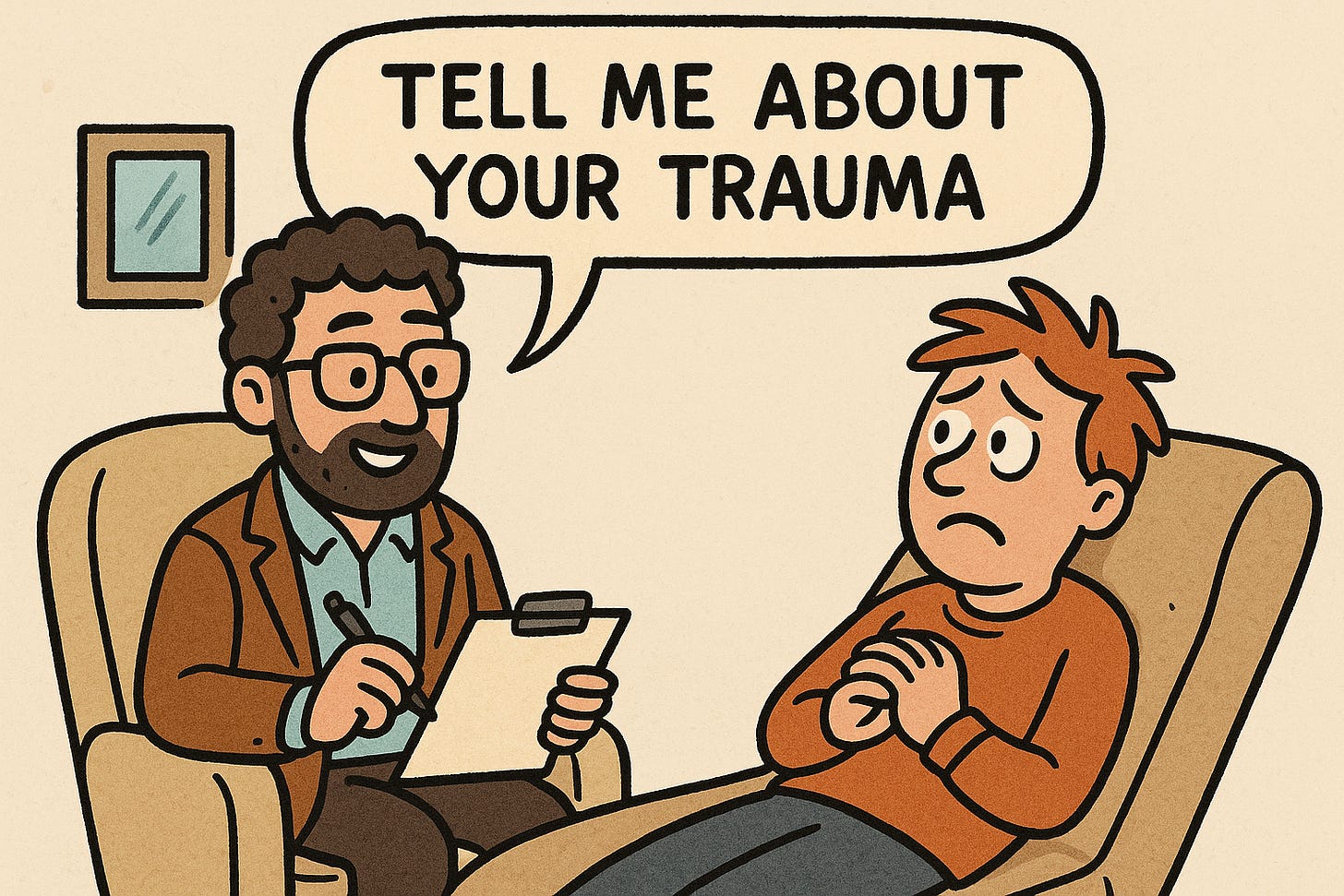
What about our current era? I suspect history will record the theme of this past two decades as “trauma.” To quote the queen of zeitgeist, Oprah Winfrey (from her 2021 book with Bruce Perry), “It’s not what’s wrong with you; it’s what happened to you.” (Sidenote: Freud would have edited this sentence to say, “it’s what you think – and unconsciously wished - happened to you.”) The idea that past adversity underlies almost every psychological problem has become a cultural article of faith. Trauma anchors our narratives not only for PTSD as the flagship disorder but the entire fleet of anxiety disorders, mood disorders, and psychosis. Treatments are trauma-informed, psychological explanations track back to Adverse Child Experiences (ACEs), and even biological research is now focusing on epigenetics (the study of how experience alters gene expression).
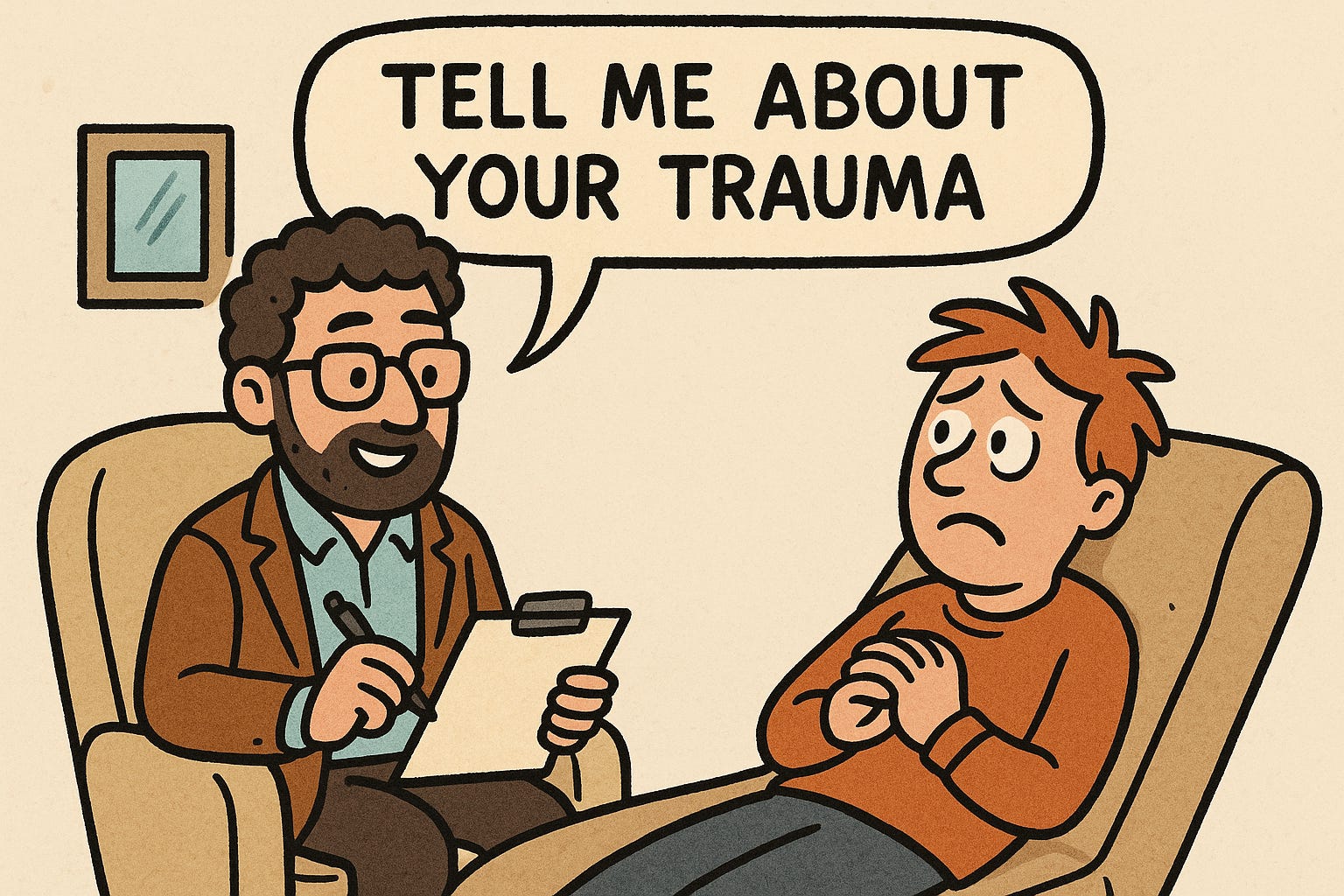
No doubt this represents progress, especially for people trapped in a cycle of self-blame and shame. But what about the limitations? Does the trauma focus shift us to blaming others? Does it create a victim mindset? Does it prioritize fragility over resilience? Does it assume passivity rather than personal agency? Does it keep us focused on problems rather than solutions? Contrast Oprah Winfrey’s quote to this quote, usually attributed to Carl Jung, “I am not what happened to me. I am what I choose to become.” Actually, Jung never wrote this (the relevant quote from his Collected Works Vol 11 is more enigmatic, “It is not I who create myself, rather I happen to myself.”) But his point was clear: we are not merely a product of what happened to us. We act, we choose, we become. Jung, a Swiss psychoanalyst, was writing a century ago in a different zeitgeist for sure.
It’s probably worth asking how our field in this era of unprecedented wealth and opportunity became enamored with “trauma” as an organizing theme. Not the victims of genocide, famine, or war, this is a generation that has been largely protected from the horrors of the twentieth century. And yet, “what happened to you?” seems to be the question on the lips of every trauma-focused therapist.
But I didn’t write this post to critique the trauma zeitgeist (and invite the wrath of mainstream psychotherapy). I wrote this because the zeitgeist is “a-changin”. Politics, art, and science live downstream from culture. The sea change in our politics is unmistakable. How will the cultural changes that have shaped our politics alter our approach to mental health and our theories of mental disorders. If we have gone from brainless to mindless to blameless, what’s next?
The discoveries or technical breakthroughs that will shape this era are already apparent. Social media and gen-AI are revolutionizing every aspect of our zeitgeist, and not always for the better. The battle for attention and the search for connection are becoming the defining issues of this era. The global youth mental health crisis and epidemic of loneliness may be symptoms of this new disorder. And it seems likely that our previous paradigms – brainless, mindless, blameless – will not suffice. We’re going to need a bigger boat.
What does this bigger boat looks like? I don’t know. Maybe it will steer from me to we, centering community over introspection. Maybe it will reclaim meaning in an era of algorithms. I’m drawn to that Jungian paradox that “I happen to myself.” The next zeitgeist may ask us not what happened to us—but what we will make happen, together. Or maybe — in a darker scenario — with the advent of super-intelligence we will have less agency, less empowerment. Either way, I sense that this era - when psychiatric labels have become common terms for distress and trauma has become the explanation for our ills - will soon be coming to a close.